How to Choose Anti-Aging Tea: Buying Guide
How to choose anti-aging tea without wasting money: key ingredients, quality signs, brewing tips, and red flags to avoid when buying online or locally.
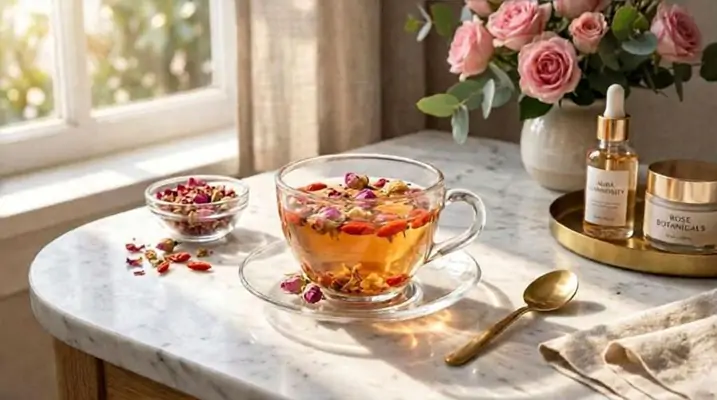
Anti-aging tea is a crowded market. Every package promises glowing skin, and every influencer has a favorite blend. The difference between a useful daily habit and an expensive mistake usually comes down to three things: ingredients, freshness, and realistic expectations.
Read the ingredient list first
Look for whole botanicals you recognize: goji berry, chrysanthemum, rose bud, tremella, jasmine green tea, or black goji. Avoid blends where the first ingredient is sugar, maltodextrin, or artificial flavor. A long list of exotic names with no quantities is a marketing signal, not a quality signal.
Signs of quality
- Whole flowers and berries rather than powder or dust.
- A clean, fresh aroma with no musty or sour notes.
- Clear origin and harvest information.
- Small packaging that you can finish within a few months.
Red flags
Be cautious with products that promise overnight wrinkle removal, claim to replace medical treatment, or list proprietary blends without amounts. Also avoid tea that has been stored in direct sunlight or has clumped into hard blocks. Freshness matters more than a fancy label.
Loose leaf or tea bags?
Loose leaf usually gives better flavor and lets you see the ingredients. Tea bags are convenient and fine for travel. If you choose bags, look for whole-leaf or whole-flower fill, not fine dust.
How to brew for best results
Use water just below boiling for green tea and jasmine, and slightly hotter water for goji, rose, and chrysanthemum. Steep for three to five minutes. Over-steeping makes the tea bitter and does not add benefits. Drink it without sugar, or sweeten lightly with a date or a small piece of rock sugar.
FAQ
Is expensive tea always better?
No. Price often reflects packaging and marketing. Fresh, whole ingredients from a reliable seller matter more.
Can I drink the same blend every day?
Yes, if it suits you. Rotate two or three blends for variety and to avoid overloading one herb.
How much should you spend?
You do not need a luxury blend. A reasonable daily tea costs roughly the same as a coffee habit. Spend more on freshness and clear sourcing, not on gold packaging. Buy small amounts, finish them, and repurchase rather than storing a year of tea.
Storage
Keep dried flowers and berries in an airtight jar away from light, heat, and moisture. Do not store tea above the stove or in a sunny window. If the aroma fades or the texture changes, replace it.
Go deeper: This article is part of the Anti-Aging Tea Guide. For a local angle, read anti-aging tea in Seattle.
Disclaimer: This article is for educational purposes only and is not medical advice. Herbal remedies can interact with medications and are not suitable for everyone. Consult a qualified healthcare professional before changing your diet, supplements, or treatment.