Chrysanthemum Tea: Benefits for Eyes, Skin & Heat
Chrysanthemum tea is a classic Eastern remedy for eye strain, redness, and summer heat. Learn how to brew a calming cup and who should avoid it.
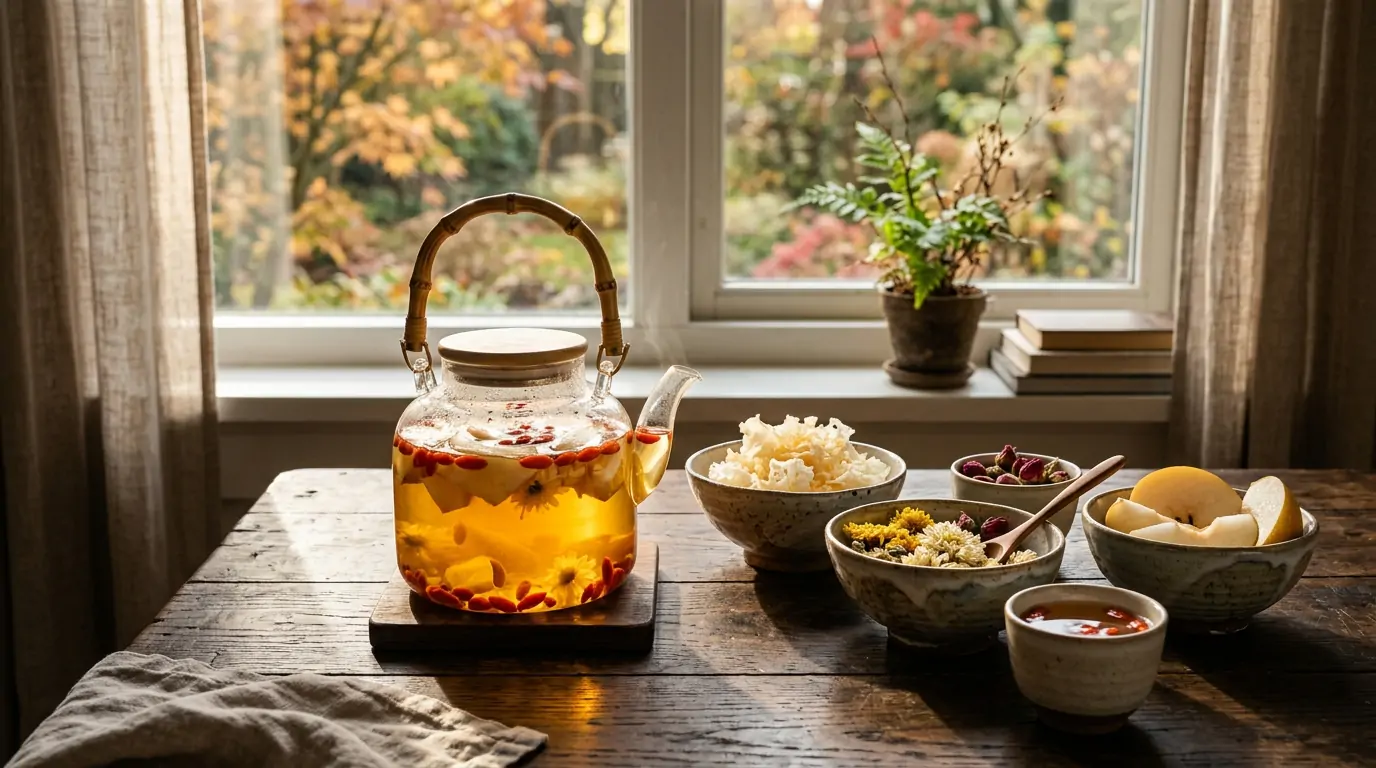
Chrysanthemum tea is one of the most familiar herbs in Chinese households. It is light, floral, and cooling, and it is traditionally used for eye strain, redness, headaches, and the irritability that comes with summer heat.
What is chrysanthemum tea?
The tea is made from dried chrysanthemum flowers, usually the small white or yellow varieties. It has a mild sweetness and a clean floral aroma. In Eastern medicine it is considered cooling and is often paired with goji berries to balance its cool nature.
Benefits for eyes and skin
Chrysanthemum is traditionally used for tired, dry, or red eyes, especially after long hours of screen work. It is also used when heat shows up on the skin as redness or breakouts. Modern research is limited, but the flowers contain antioxidant compounds that support general wellness.
How to brew it
- Use five to eight dried flowers for 300 ml of hot water.
- Steep for three to five minutes; longer becomes bitter.
- Add a few goji berries for sweetness and blood nourishment.
- Drink in the afternoon, especially after screen time.
Simple pairings
Chrysanthemum and goji
A classic combination for eyes and skin. The goji adds sweetness and nourishment; the chrysanthemum keeps the blend light and cooling.
Chrysanthemum and rose
Rose moves qi and supports mood. This pairing is useful when stress and eye strain appear together.
Chrysanthemum and pear
In autumn, simmer chrysanthemum with diced pear for a soothing drink. See our autumn tea recipes for the full recipe.
Cautions
Chrysanthemum is cooling, so people who feel cold, have low blood pressure, or are pregnant may want to use it less often or pair it with warming ginger. If you have allergies to the aster family, avoid it.
FAQ
Can I drink chrysanthemum tea every day?
One cup daily is generally fine for healthy adults. If you feel cold or have a sensitive stomach, reduce the frequency.
Does it contain caffeine?
No. Chrysanthemum tea is naturally caffeine-free, which makes it a good afternoon or evening choice.
Choosing quality flowers
Look for whole, pale yellow or white flowers with a clean floral scent. Avoid packages with brown, crushed petals or a musty smell. Store in an airtight jar away from light. Rinse briefly before brewing if the flowers look dusty.
Chrysanthemum in food therapy
Beyond tea, chrysanthemum can be added to rice congee or pear soup in the last few minutes of cooking. It pairs well with goji, rose, and a small piece of rock sugar. In summer, serve the tea at room temperature rather than ice cold to protect digestion.
What the research says
Chrysanthemum contains antioxidant compounds, but human studies are limited. The traditional uses for eye comfort and heat are reasonable supportive practices, not proven treatments. If eye strain persists, get a proper eye exam.
Go deeper: This article is part of the Anti-Aging Tea Guide. For more recipes, see 8 anti-aging tea recipes.
Disclaimer: This article is for educational purposes only and is not medical advice. Herbal remedies can interact with medications and are not suitable for everyone. Consult a qualified healthcare professional before changing your diet, supplements, or treatment.